


A Study on the Driving Mechanism and Global Market Impact of China’s Transformer Exports Reaching a Record High in 2025
summary
In 2025, China’s transformer exports reached a record high. Against the backdrop of a global shortage and rising prices of power grid equipment, the core value of China’s supply chain continued to stand out. This article, based on data from the General Administration of Customs, industry consulting firms, and capital markets, analyzes the core characteristics of China’s transformer export growth, explores the formation mechanism of global supply-demand mismatch, dissects demand-driven factors such as data center construction and energy transition, as well as supply-side bottlenecks, and elucidates the competitive advantages of China’s supply chain and the supporting logic of domestic and international markets. Research indicates that the global transformer market supply-demand imbalance is unlikely to ease in the short term. Chinese companies, leveraging their production capacity advantages, delivery efficiency, and technological strength, are expected to continue to benefit from the global power grid upgrade and energy transition cycle, forming a dual-engine growth pattern of “domestic demand as the foundation and external demand as the driving force.”
Keywords
Transformer exports; supply and demand mismatch; supply chain advantages; data centers; energy transition
I. Introduction
Against the backdrop of accelerated global energy transition and booming digital economy, the demand for core power equipment such as transformers continues to surge due to upgrades in power grid infrastructure and the construction of data centers. Simultaneously, global transformer capacity expansion has lagged behind demand growth, compounded by shortages of key raw materials and rising logistics costs, leading to widespread equipment shortages and soaring prices. As a major global manufacturer and exporter of power equipment, China achieved significant growth in transformer exports in 2025, with both export volume and average price rising in tandem, further expanding its share in the global market. This article aims to systematically analyze the driving factors, market impact, and sustainability of this growth trend, providing a reference for industry development and corporate strategic planning.
II. Characteristics of China’s Transformer Export Growth in 2025 and the Global Market Background
2.1 Core Data and Structural Characteristics of China’s Transformer Exports
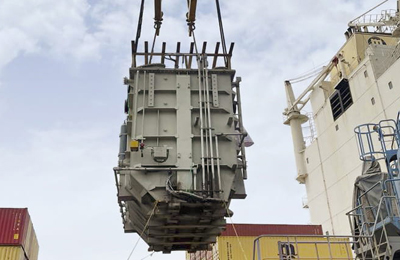
According to statistics from the General Administration of Customs, China’s total transformer exports reached 64.6 billion yuan in 2025, an increase of nearly 36% year-on-year, setting a new historical record. The average price per exported transformer rose to 205,000 yuan, an increase of approximately 33.3% year-on-year, demonstrating a significant increase in both volume and price. In terms of export structure, liquid transformers became the main driver of growth, with cumulative exports increasing by 51% year-on-year in 2025, showcasing strong market demand. Regionally, North America and Africa performed exceptionally well, with export growth rates reaching 52% and 32% respectively. The United States, Saudi Arabia, and Thailand were the top three destinations for the increase in China’s transformer exports, reflecting the dual demand-driven effect of emerging markets and developed economies.
2.2 Current Status of Supply and Demand Imbalance in the Global Transformer Market
Globally, core power grid equipment such as transformers is facing severe shortages, and the supply-demand imbalance continues to intensify the industry’s growth. Energy consultancy Wood Mackenzie estimates that the United States, as the world’s largest buyer of transformers, currently faces a supply shortage of approximately 30% for power transformers and 10% for distribution transformers, and this supply-demand imbalance is expected to continue into the 2030s. From an investment perspective, Bloomberg New Energy Finance data shows that global power grid investment exceeded $480 billion for the first time in 2024, and this strong growth momentum is expected to continue in the coming years, further amplifying equipment demand.
The supply-demand mismatch has directly driven a sharp rise in transformer prices. Since 2020, the global power transformer price index has increased by 1.5 times, with prices for some complex models rising to 2.6 times pre-pandemic levels. The core drivers of this price fluctuation include the widening supply-demand gap, shortages of key raw materials such as grain-oriented silicon steel, and the overall cost pressure from rising global logistics costs.
2.3 Support from domestic policies and market demand
The domestic market provides solid support for the transformer industry. On January 15th, the State Grid Corporation of China announced that its fixed asset investment during the 15th Five-Year Plan period is expected to reach 4 trillion yuan, a 40% increase compared to the 14th Five-Year Plan period. The core investment will be directed towards ultra-high-voltage transmission lines, distribution network upgrades, and the construction of new power systems. Approximately 40% of the funds will be used for the upgrading and expansion of transmission and transformation equipment, directly boosting domestic demand for transformers. Meanwhile, data released by the National Energy Administration on January 17th shows that my country’s total electricity consumption will historically exceed 10 trillion kilowatt-hours by 2025, reaching 10.4 trillion kilowatt-hours, a year-on-year increase of 5%. This steady growth in electricity consumption provides a sustained demand foundation for the transformer market.
2.4 Capital Market Response to Industry Prosperity
The industry’s strong performance has directly impacted the capital market. On January 19th, the A-share power grid equipment sector performed strongly, with several stocks, including Shuangjie Electric, Hanlan Cable, Dalian Porcelain, China XD Electric, and Baobian Electric, hitting their daily limit. Among them, China XD Electric’s trading volume reached 11.026 billion yuan, and Baobian Electric’s reached 6.519 billion yuan, demonstrating the high favor shown by leading companies in the capital market. During the same period, the power grid equipment ETF rose by 6.39% intraday, achieving net capital inflows for seven consecutive trading days, totaling over 4 billion yuan, with its latest size reaching 8.575 billion yuan, a new high since its inception, fully reflecting the market’s strong optimism about the future development prospects of the power grid equipment industry.
III. Core Driving Factors of the Explosive Growth in Transformer Market Demand
3.1 The Leading Role of the Data Center Construction Boom
The core driver of order growth for Chinese transformer manufacturers stems from the combined effect of upgrading aging power grids overseas and the global data center construction boom, with the explosive expansion of AI data centers being a key driver of growth. A research report by the team of analysts Xu Qiang and Fang Qing at Guotai Haitong Securities points out that the global data center market size will grow from US$242.72 billion in 2024 to US$584.86 billion in 2032, with a significantly increased compound annual growth rate.
The demand for electricity from data centers is growing exponentially, with half of that demand being met by renewable energy generation. This characteristic directly drives a surge in demand for transformers and switchgear at both the substations at the grid connection and the renewable energy power plants at the generation end. TrendForce estimates that the global installed capacity of AI data centers was approximately 15GW in 2024 and is projected to soar to 66GW by 2027, representing a compound annual growth rate of 64%. The corresponding transformer market size will reach 26.4 billion yuan, more than four times the 2024 figure. This demand leans towards customized, high-end products, placing higher demands on transformer size, high-temperature resistance, and intelligent monitoring capabilities, further driving technological upgrades and product structure optimization within the industry.
3.2 Global Energy Transition and Grid Upgrade Needs
The global energy transition is accelerating, with renewable energy capacity continuing to expand, driving increased demand for power grid infrastructure upgrades. To achieve dual-carbon goals, countries are increasing investment in ultra-high-voltage (UHV) and smart grids, and transformers, as core equipment for power conversion and transmission, are a crucial link in grid upgrades. Meanwhile, the power grid infrastructure in developed economies such as Europe and the United States is generally facing aging issues, creating an urgent need for replacement of outdated equipment, further expanding the global transformer market.

IV. Global Transformer Market Supply Bottlenecks and Short-Term Trends
A research report by Guotai Haitong Securities points out that although global markets have announced new investment plans, the long expansion cycle of transformer capacity and the scarcity of core resources mean that the supply gap is unlikely to ease in the short term. Data from the International Energy Agency’s (IEA) 2025 special report shows that the delivery cycle for large power transformers will remain at a historically high level in 2025. The delivery cycle for a 400-ton high-voltage transformer has extended from the traditional 18 months to more than four years, more than double the level in 2021. This significant extension of the delivery cycle further exacerbates the supply-demand imbalance.
The reasons for the supply bottleneck are multiple: First, the capacity construction cycle is long, and it takes 1-2 years for new capacity to form an effective supply. The training and configuration cycle for skilled workers and core production equipment is even longer, and new capacity will generally not be implemented until 2026-2027. Second, the supply of core materials is tight. As the core raw material for transformers, the global production capacity of oriented silicon steel is highly concentrated. In 2026, the price increased by 17% year-on-year, which not only pushed up production costs, but also directly restricted the release of production capacity.
Against this backdrop, Chinese companies have distinguished themselves by their rapid delivery capabilities. The delivery cycle for customized transformer products from domestic manufacturers can be reduced to approximately 12 weeks, only a quarter of that of US-based suppliers. This high delivery efficiency has become one of the core competitive advantages of Chinese companies in the global market.
V. Competitive Advantages and Development Pattern of China’s Transformer Supply Chain
5.1 Global Market Position and Export Advantages
Research reports show that China’s transformer exports account for a quarter of the global total, contributing approximately 60% of global production capacity and holding a crucial position in the global industrial chain. In high-end fields such as ultra-high voltage (UHV) transformers and converter transformers, leading companies like China XD Group and TBEA have formed an oligopoly with international giants, dominating over 90% of domestic UHV tenders, and their technological strength and product quality have gained market recognition.
The increasing reliance of European and American markets on transformer imports has created favorable conditions for the export of Chinese products. Since 2018, the trade volume of power transformers in European and American markets has doubled. From January to August 2025, China’s transformer exports to Europe are expected to increase by 138%, while exports to Southeast Asia are expected to maintain a growth rate of over 30%, demonstrating a significant diversification of export markets and a high growth trend.
5.2 The dual-engine growth pattern of “domestic demand as the foundation and external demand as the driving force”
The continued expansion of the domestic market has further consolidated the competitive advantage of China’s supply chain. The State Grid’s 4 trillion yuan investment during the 15th Five-Year Plan period will focus on promoting the construction of ultra-high-voltage power transmission channels, increasing inter-regional and inter-provincial power transmission capacity by over 30%, while also supporting the connection of 35 million charging facilities, comprehensively and multi-dimensionally driving transformer demand. Furthermore, China’s large-scale investment and construction in the renewable energy supergrid sector has created a sustained and stable domestic demand growth space for domestic transformer manufacturers.
In overseas markets, the global supply-demand mismatch, coupled with the competitive advantages of Chinese companies, has driven the continuous expansion of exports. Looking ahead, with the continued growth of global power grid investment and the deepening of data center construction, Chinese transformer companies are expected to fully benefit from this infrastructure restocking cycle, further increasing their global market share.
Conclusion
China’s transformer exports hit a record high in 2025, a result of the combined effects of global supply-demand mismatch, demand structure upgrading, and China’s supply chain advantages. Global transformer market demand growth is primarily driven by the data center construction boom, energy transition, and grid upgrades. However, supply is constrained by factors such as capacity cycles and raw material shortages, making it difficult to close the gap in the short term. This presents a vast market opportunity for Chinese companies.
China’s transformer industry has continuously strengthened its competitiveness in the global market thanks to its complete supply chain system, efficient delivery capabilities, leading technological strength, and a dual-engine growth model of “domestic demand as the foundation and overseas demand as the driving force.” Looking ahead, with the deepening of domestic new power system construction and the continued release of overseas market demand, Chinese transformer companies are expected to occupy a more advantageous position in the global industry landscape and achieve sustained and steady development. At the same time, the industry needs to pay attention to potential risks such as raw material price fluctuations, technological upgrades, and changes in the international trade environment, and further consolidate its competitive advantages through technological innovation and supply chain optimization.
References
[1] Xu Qiang, Fang Qing. Special Report on the Overseas Expansion of Power Equipment – Data Centers and Others Drive Demand for Transformers and Switches, with a Significant Supply Gap [R]. Shanghai: Guotai Haitong Securities, 2025-11-26.
[2] Consainsights. Data Center Transformers Market Report[R]. 2025-12-15. https://www.consainsights.com/reports/data-centre-transformers-market.
[3] China Energy Network. Power Equipment Exports: Transformers and Switches Perform Well, Meters and Cables See Month-on-Month Rebound [EB/OL]. 2025-08-28. http://m.toutiao.com/group/7543479787516428838/?upstream_biz=doubao.
[4] Anonymous. Breaking News! Transformers in Short Supply! Global Transformer Supply Crisis! [EB/OL]. 2026-01-06. http://www.shturl.cc/f3f08bfc3bc71e32725121c78ee2a2b5.
[5] China Report Hall. Statistics on export data of liquid dielectric transformers, 10MVA < rated capacity < 220MVA, September 2025 (85042311) [EB/OL]. 2025-11-05. https://m.chinabgao.com/stat/stats/80947637.html.
[6] SDIC Securities. The AI wave has arrived, and power equipment is expected to usher in new opportunities [R]. 2026-01-13. http://www.shturl.cc/7664cae738d6069470cb13911f6c8bf5.