


Role of Power Transformers in Industrial Applications
The Essential Role of Power Transformers in Industrial Applications: Powering Modern Manufacturing
How These Critical Components Enable Efficiency, Safety, and Reliability in Industrial Operations
Power transformers are the unsung heroes of the industrial landscape. They play a fundamental role in ensuring that factories, plants, and large facilities have the appropriate electrical power to run heavy machinery, automation systems, and lighting infrastructure efficiently and safely. This article explores their critical functions, key applications, and selection considerations.
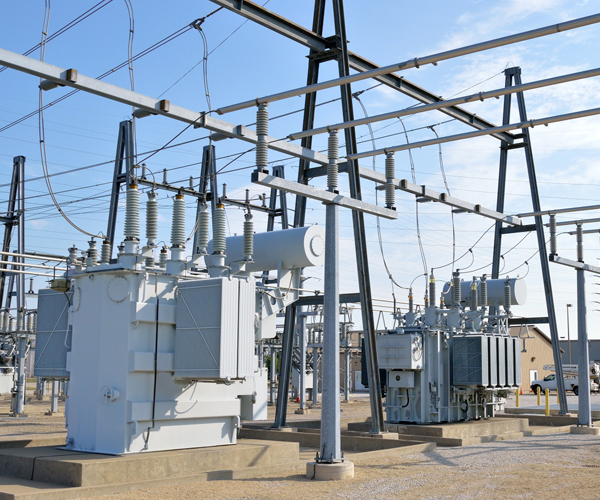
Electric Power Substation
Core Functions: What Do Power Transformers Do in an Industrial Setting?
At their heart, power transformers adjust voltage levels of alternating current (AC). In industrial contexts, this involves two primary transformations:
-
Step-Down Transformation: The primary and most common function. They receive high-voltage electricity from the public grid (e.g., 33 kV or 11 kV) and step it down to safer, usable levels (e.g., 480V, 240V, 120V) for plant machinery and equipment.
-
Step-Up Transformation (Less Common): In some cases, such as for dedicated high-power processes or for feeding power back into the grid (cogeneration), they may step up voltage.
Key Purposes Served:
-
Voltage Transformation: Matching supply voltage to equipment requirements.
-
Electrical Isolation: Physically separating the primary and secondary circuits, enhancing safety for personnel and equipment.
-
Power Quality & Stability: Helping to regulate voltage and protect sensitive processes from fluctuations.
| Industry Sector | Primary Role of Power Transformer | Key Benefit Delivered |
|---|---|---|
| Manufacturing & Heavy Industry | Powering large motors, presses, conveyor systems, and assembly lines. | Enables operation of high-power machinery from a standard grid supply. |
| Chemical & Petrochemical Plants | Providing reliable power for continuous processes, pumps, and control systems in hazardous areas. | Safety and reliability in volatile environments; often special flame-proof designs are used. |
| Metals & Mining | Supplying immense power to arc furnaces, smelters, crushers, and heavy excavators. | Handles extremely high and fluctuating loads required for material processing. |
| Water & Wastewater Treatment | Operating high-power pumps, aeration blowers, and control systems for plant automation. | Ensures continuous utility service and process reliability. |
| Data Centers (Industrial Scale) | Stepping down voltage for Uninterruptible Power Supplies (UPS) and server racks. | Provides clean, stable power critical for data integrity and uptime. |
Key Considerations for Selecting an Industrial Power Transformer
Choosing the right transformer is crucial for efficiency and longevity. Here are the essential factors broken down into a simple list:
1. Rating & Capacity
-
kVA (Kilovolt-Ampere) Rating: Must match or exceed the total connected load of the facility, with a margin for future expansion.
-
Voltage Requirements: Precise input and output voltage specifications.
2. Efficiency & Losses
-
Core (Iron) Losses: Constant losses from magnetizing the core.
-
Copper (Load) Losses: Variable losses dependent on the load current.
-
Look for high-efficiency models (e.g., meeting DOE or IEC standards) to reduce lifecycle costs.
3. Cooling Method
-
Dry-Type: Use air cooling. Preferred for indoor applications, mines, and environments where fire safety is paramount (no oil risk).
-
Oil-Immersed: Use oil for cooling and insulation. Typically more efficient for very high-capacity, outdoor applications.
4. Protection & Safety Features
-
Enclosure (IP Rating): Protection against dust and water (e.g., for outdoor or harsh environments).
-
Built-in Protection: Against overloads, short-circuits, and overheating.
-
Dielectric Strength: Critical for withstanding voltage surges.
5. Impedance
-
A key parameter affecting short-circuit current and voltage regulation. Must be engineered for the specific plant’s electrical system.