


Analysis of Key Control Points in Large Power Transformer Installation and Commissioning
From Delivery to Operation, These 7 Steps Are Where “Assuming” Gets You Into Trouble
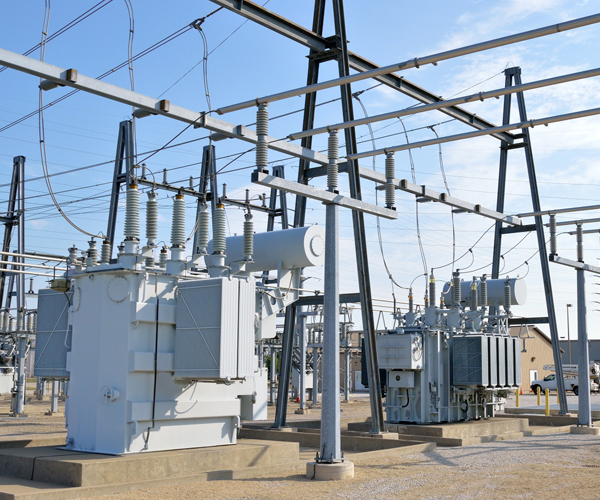
Electric Power Substation
Installing and commissioning a large power transformer isn’t exactly rocket science, but anyone who’s actually done it knows one thing: problems rarely come from complex theory — they come from overlooked basics.
Below, the process is broken down into 7 key control points, each with “common pitfalls” and “things you must take seriously.”
Control Point 1: Equipment Receiving and Unpacking Inspection
A lot of people think “just unload the gear as soon as it arrives” — then pay for it later.
| Key Action | Common Issue | What You Must Check |
|---|---|---|
| Visual inspection | Only check the tank, ignore the shock recorder | Any shock over 3g must be reported — do not sign off |
| Unpacking & inventory | Missing small parts (bushings, radiators, bolts) | Check off item by item, take photos, document shortages on the spot |
| Insulating gas pressure | Assume factory pressure is fine | Record SF6 or N2 pressure — if below 0.05 MPa, leak-check |
Real talk: The 10 minutes you save by rushing unpacking can cost you two days later figuring out who’s at fault.
Control Point 2: Positioning and Foundation Check
If the transformer isn’t level, every measurement after that is wrong.
-
Foundation levelness: Allowable deviation ≤ 3mm over full length. Use a precision level — don’t fake it with a carpenter’s level.
-
Vibration isolation & embedded plates:
-
Embedded plates must be level and coplanar
-
Isolation pads or rollers must align with drawings — no offset
-
-
Center of gravity & shipping braces: For gas-filled transport, confirm internal bracing is removed before positioning (many accidents happen right here).
Control Point 3: Internal Inspection (Tank Entry)
This is the step most likely to get rushed — and the riskiest.
Do it on a dry, low-humidity day. But on site, schedules always push back. These three rules are non-negotiable:
-
Dew point control
Ambient humidity ≤ 75%. Maximum exposure time of the active part:-
Humidity ≤65% → max 16 hours
-
65% < humidity ≤75% → max 12 hours
-
-
What to check
-
Core clamping bolts — tight?
-
Lead insulation — damaged or displaced?
-
Foreign objects inside (screws, welding slag) — use a strong flashlight + wipe with a clean white cloth
-
-
Last step before sealing
Two-person cross-check: no debris, no tools left inside, gaskets seated correctly.
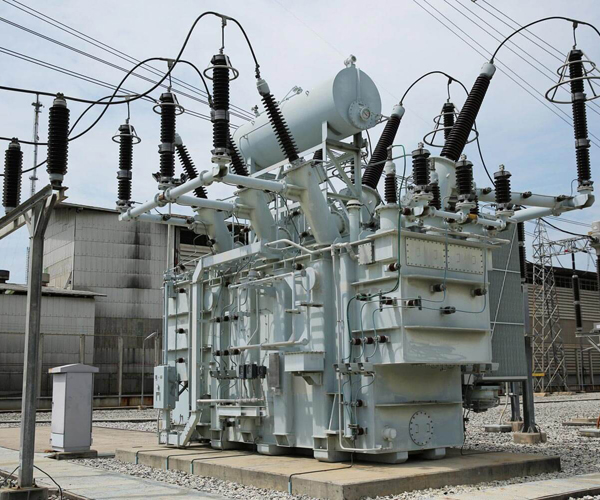
Control Point 4: Vacuum Oil Filling and Hot Oil Circulation
If oil processing is done wrong, the transformer will develop insulation problems within three years.
| Step | Control Parameters | Watch Out For |
|---|---|---|
| Vacuum pulling | Residual pressure ≤ 133 Pa (for ≥35kV), hold ≥8 hours | Don’t trust pump runtime — read the vacuum gauge |
| Oil filling | Oil temp 50–70°C, fill rate 3–5 tons/hour | Too fast = trapped bubbles |
| Hot oil circulation | ≥ 24 hours, inlet-outlet temp difference 10–15°C | Stopping early = wasted effort |
| Settling | ≥24h for 110kV class, ≥48h for 220kV class | No meggering or hi-pot testing during settling |
Control Point 5: Electrical Testing (Staged)
Don’t wait until everything is fully assembled to test — if something’s wrong, it’s a nightmare to take apart.
Stage 1: Winding & Core Tests (before oil filling)
-
DC resistance: phase difference ≤ 2%, line difference ≤ 1%
-
Insulation resistance (2500V megger): absorption ratio ≥ 1.3 (or PI ≥1.5)
-
Core insulation: typically > 100 MΩ to ground
Stage 2: Insulating Oil Tests (after hot oil circulation)
-
Breakdown voltage: ≥ 50 kV (for 110kV class and above)
-
Moisture content: ≤ 15 ppm
-
Dielectric dissipation factor (90°C): ≤ 0.5%
Stage 3: Pre-commissioning Tests (fully assembled)
-
AC withstand (80% of factory test value)
-
Partial discharge measurement: ≤ 100 pC (for 220kV class)
-
Winding deformation test (sweep frequency response) — no significant change between phases
Control Point 6: Cooling System and Auxiliaries Commissioning
Too many people stare at the main tank and forget the radiators and fans.
-
Oil pumps and fans
Start each one individually — listen for abnormal noise, measure three-phase current balance (deviation ≤10%) -
Buchholz relay (gas relay)
-
Mounting direction must be correct (arrow pointing toward conservator)
-
Perform trip test: light gas at 25–35ml, heavy gas at specified flow setting (typically 0.6–1.2 m/s)
-
-
Oil level gauge and thermometer
Analog outputs must match the SCADA reading (replace if error > ±2°C)
Control Point 7: Energization and Trial Run
The last step — and the most intense. Don’t pack up too soon.
| Item | Operation | Why It Matters |
|---|---|---|
| Energization (inrush) | 5 times, ≥5 minutes between, run 24h after last shot | Checks mechanical strength under inrush and protection misoperation |
| No-load current | Record three-phase no-load current — deviation from factory value ≤15% | High current may indicate core short circuit |
| Trial run listening | Use a stethoscope rod against the tank | High-frequency “hissing” = possible partial discharge |
| Infrared thermography | Check bushing connections, lead joints, radiator inlet/outlet | ΔT >10°C = poor contact |
An Overarching Rule That’s Easy to Forget
All key control points ultimately come down to three things:
-
Cleanliness — Oil piping internals, active part surface, tools. Dirty = hidden trouble.
-
Traceability — Every vacuum reading, oil temperature, time stamp, and test result must be logged and filed.
-
No rushing — Vacuum hold time, settling time, hot oil circulation time. One hour short today may cost one year of life later.
Transformer installation and commissioning is basically error-proofing — locking down every possible mistake in advance with procedures. Nail these 7 points, and you’ll avoid at least 80% of post-commissioning failures.