


What are the possible causes and troubleshooting steps for an abnormally high temperature during transformer operation?
An abnormally high temperature in a transformer during operation is usually a direct result of internal equipment failure or deteriorating external operating conditions. If not addressed promptly, it can lead to accelerated insulation aging or even equipment failure.

I. Possible Causes
1. Internal Faults
-
Winding or Core Faults:
-
Turn-to-Turn Short Circuit: Damaged winding insulation leads to circulating current, causing localized or overall temperature to rise sharply.
-
Core Multi-Point Grounding: Normally, the core should have a single-point ground. Multi-point grounding forms a closed loop, inducing eddy currents and leading to localized core overheating.
-
Core Lamination Short Circuit: Damaged insulation between silicon steel sheets increases eddy current losses.
-
-
Poor Tap Changer Contact:
-
On-Load Tap Changer (OLTC): Worn, loose, or contaminated contacts result in excessive contact resistance and overheating. This typically manifests as localized temperature anomalies at the top of the tank and darkening of the oil.
-
-
Insulation Aging or Moisture Ingress:
-
Deteriorated insulation or internal moisture increases dielectric loss (tanδ), generating additional heat.
-
2. Cooling System Failures
-
Cooling Equipment Failure:
-
Malfunctioning forced oil-cooling pumps (air/water), damaged fans, or tripped control cabinet power supply for coolers.
-
Radiator valves not opened or blocked by foreign objects.
-
-
Obstructed Oil Circulation:
-
Incorrect rotation direction, insufficient speed of oil pumps, or sediment blockage within oil pipes.
-
3. Operating Conditions
-
Prolonged Overload:
-
Load current exceeding the rated value and surpassing the cooling system’s capacity, leading to continuously rising top-oil and winding temperatures.
-
-
Environmental Factors:
-
Sudden increase in ambient temperature, heavy dust accumulation on radiators, or blocked ventilation ducts (especially for indoor transformers).
-
-
Three-Phase Unbalance (for distribution transformers):
-
The neutral point shift caused excessive current in a certain phase winding, resulting in an abnormally high temperature in that phase.
-
4. Measurement and Protection System Malfunctions
-
Thermometer Malfunction: Damaged RTD (PT100/thermocouple), drifting temperature transmitter, or the temperature probe not fully inserted into the thermowell (or presence of air in the thermowell).
-
Incorrect Gauge Indication: Stuck pointer, fractured capillary tube (for pressure-type thermometers).
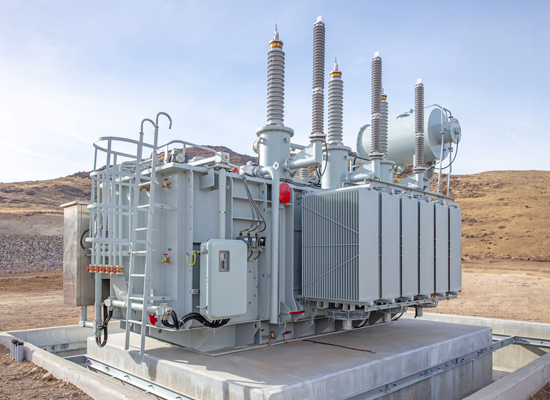
II. Troubleshooting Steps (External to Internal, Simple to Complex)
Step 1: Verify Instruments and On-Site Confirmation
-
Compare Three-Phase Temperatures: Verify if the temperature displayed on the supervisory system matches the readings from the local transformer thermometers (oil temperature gauge, winding temperature gauge). If a significant discrepancy exists, prioritize checking the temperature measurement circuit.
-
Visual Inspection: Check for discoloration or blistering of the transformer tank paint (signs of localized overheating). Inspect whether the temperature distribution across radiator surfaces is uniform (use an infrared thermal imager).
-
Acoustic Inspection: Listen for unusual sounds. The normal sound is a steady “hum.” A “crackling” sound may indicate internal arcing or poor tap changer contact. A dull or intense sound may point to core loosening or severe overload.
Step 2: Check Cooling and Load Systems
-
Inspect Cooler Operation:
-
Verify that the cooler control panel power supply is normal and that all fans and oil pumps are running (especially those that should auto-start based on temperature).
-
Check that radiator valves are in the “Open” position.
-
Check for heavy dust or oil buildup on radiator surfaces that could hinder heat dissipation.
-
-
Verify Load Conditions:
-
Check ammeters to confirm if the transformer is operating under overload (exceeding rated current).
-
For distribution transformers, calculate the three-phase unbalance rate (Max Phase Current−Min Phase CurrentMax Phase Current×100%). If it exceeds 15%, load balancing is recommended.
-
Step 3: Precise Localization Using Infrared Thermography
-
Scan the Main Tank: Scan the transformer tank surface. Under normal conditions, there should be a noticeable temperature difference between the top and bottom of radiators (hot oil enters at top, exits cooler at bottom). If localized hot spots are found (e.g., at bushing connections, below the tap changer operating mechanism, or at the core grounding lead), mark them for focus.
-
Inspect Accessories: Check for overheating at high-voltage bushing terminals and lead connections (often indicating external loose connections). Check if the oil pump motor bodies are overheating (may indicate bearing wear).
Step 4: Oil Sampling and Electrical Diagnostic Tests
If external causes are ruled out and temperature remains abnormally high without a decreasing trend, immediately de-energize the transformer (or transfer load to a backup unit) and perform sampling and testing:
-
Dissolved Gas Analysis (DGA) :
-
This is the most effective method for diagnosing internal faults. Detection of acetylene (C2H2) indicates a discharge fault (e.g., arcing). A significant increase in total combustible gases (TCG) (CH4,C2H6,C2H4) with characteristic ratios according to the Duval Triangle or Rogers Ratio method indicates overheating.
-
Key Indicators: The presence of acetylene, or total hydrocarbons exceeding the cautionary limit (typically 150 μL/L) with a high generation rate, signifies a severe internal fault.
-
-
DC Winding Resistance Test:
-
Measure the DC resistance of the windings to identify poor tap changer contact, broken strands, or short circuits in the windings.
-
Step 5: Check Core Grounding and Insulation
-
Core Grounding Current: Under normal conditions, the core grounding current should be less than 0.1A. A significant increase indicates possible multi-point core grounding and requires scheduled maintenance.
-
Insulation Resistance Test: Measure insulation resistance of windings to ground and between windings to assess moisture ingress or through-type insulation defects.

Electric Power Substation
III. Emergency Handling Principles
-
Immediate Trip Conditions: If the temperature rises sharply accompanied by Buchholz (gas) relay operation, pressure relief device activation, severe oil leakage, or internal explosion sounds, immediately open all circuit breakers on both sides to isolate the transformer.
-
Operation with Restrictions:
-
If the temperature exceeds the allowable limit (typically for oil-immersed transformers: top-oil temperature > 95°C or temperature rise > 55K/60K) but has not yet triggered a trip:
-
Immediately switch on all available backup coolers.
-
Reduce the load (transfer load).
-
If the temperature continues to rise with all coolers running and load within limits, and DGA results are abnormal, request an outage for maintenance.
-
-
-
Handling False Indications: If a thermometer malfunction is confirmed, it may be temporarily disabled, and the actual temperature should be monitored regularly using an infrared thermal imager until the thermometer is replaced during a scheduled outage.
Summary Recommendation: When abnormal temperature rise occurs, first rule out cooling system failures and load overload, the two most common causes. If both are normal, immediately perform precise infrared temperature measurement and dissolved gas analysis (DGA) . Based on the DGA results, decide whether to trip the transformer immediately or shorten the test interval for continued monitoring.