


Classification and Configuration Standards of Transformer Voltage Levels in the Energy Storage Industry
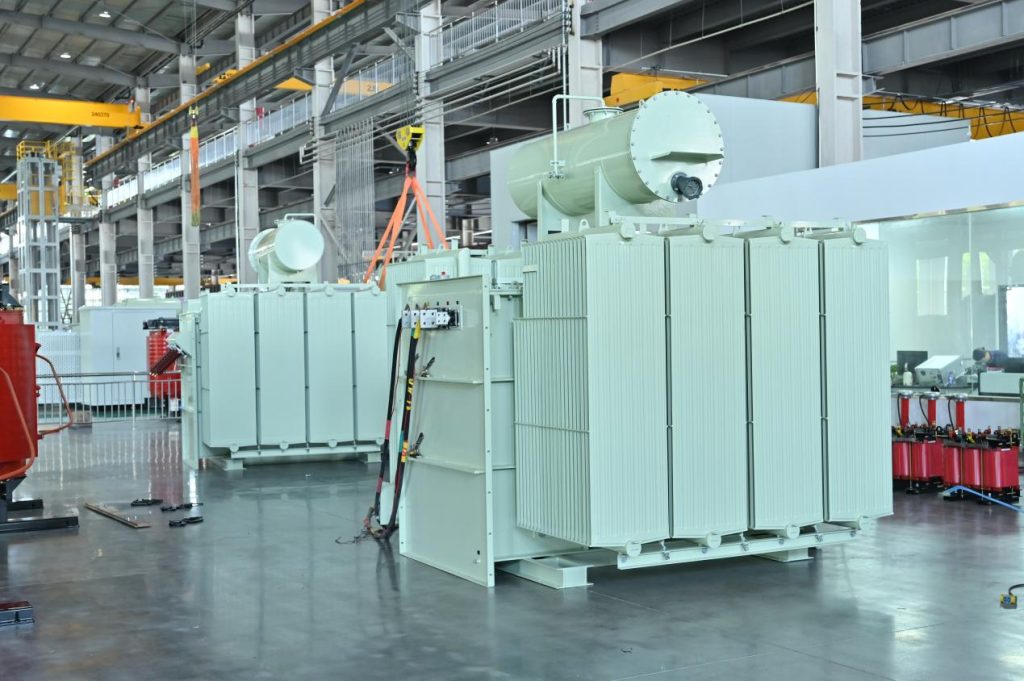
Voltage level classification is based on the transformer voltage level configuration of the energy storage system, which is determined by six core factors: energy storage installed capacity, PCS converter rated output voltage, local grid connection standard, power transmission distance, regional grid architecture, and end-load power consumption level. Combining domestic standards such as GB/T 36547 “Technical Specification for Grid Connection of Electrochemical Energy Storage Systems” and GB 51048 “Design Specification for Electrochemical Energy Storage Power Stations,” as well as international standards such as IEC 60076 and IEEE C57 series, the energy storage voltage system is uniformly classified as follows: Low pressure level, medium pressure level, high pressure level There are three levels, and each level has a fixed and mature voltage matching mode.
Low-voltage energy storage transformers cover two mainstream specifications: 0.4kV and 0.69kV. They are primarily suitable for small-scale distributed energy storage projects under 1MW, including residential energy storage, small commercial energy storage, rooftop distributed photovoltaic energy storage, communication base station energy storage, and rural micro-energy storage. PCS (Power Control System) typically outputs 0.4kV and 0.69kV. Small-scale energy storage systems can be directly connected to the grid at low voltage without the need for a step-up transformer; only an isolation transformer is required for electrical protection and noise suppression. Common turns ratios for low-voltage energy storage transformers are 0.4kV/0.4kV isolation and 0.69kV/0.4kV step-down. These transformers are compact, simple in structure, flexible in installation, and inexpensive. They are mainly epoxy resin cast dry-type structures, with a high degree of mass production standardization. Low-voltage energy storage transformers are characterized by small unit capacity, high installation density, high fire safety requirements, stable operating load, and large procurement demand, making them standard equipment for distributed energy storage.
Medium-voltage energy storage transformers include 6kV, 10kV, and 35kV, representing the voltage range with the widest global coverage and largest demand for energy storage applications. They are perfectly suited for medium-sized energy storage projects ranging from 1MW to 50MW, covering centralized energy storage for industrial and commercial use, energy storage in industrial parks, shared energy storage in county areas, and small-to-medium-sized integrated wind-solar-energy storage projects. 10kV is the most mainstream access voltage for domestic industrial and commercial distribution networks, while 35kV is the core voltage for county power grids and new energy aggregation stations. The industry-standard configuration is: PCS low-voltage output → 0.4kV/10kV step-up transformer → 10kV distribution bus → 10kV/35kV aggregation transformer → 35kV regional power grid. Medium-voltage energy storage transformers include both dry-type and oil-immersed types, with clear selection criteria: dry-type transformers are used in urban indoor areas, densely populated areas, and environmentally controlled areas; fully sealed oil-immersed transformers are used in outdoor factory areas, suburbs, and open-air scenarios. 10kV and 35kV prefabricated substations are the mainstream integrated equipment for energy storage projects. They integrate transformers, high and low voltage switches, protection devices, and metering equipment. They are modularly prefabricated and can be quickly hoisted and put into operation on site, which greatly shortens the construction cycle.
High-voltage energy storage transformers cover high-voltage levels of 110kV, 220kV, 330kV, and 500kV, primarily used in large-scale centralized energy storage projects of 50MW and above, supporting energy storage for megawatt-level new energy bases, and independent energy storage power stations directly connected to provincial power grids. High-voltage grid connection effectively reduces losses in long-distance transmission lines, improves the stability of large-capacity power transmission, and enhances the grid’s fault resilience. The high-voltage energy storage system adopts a multi-stage step-up topology. 35kV medium-voltage power is stepped up by a 110kV/220kV main transformer and directly connected to the provincial main transmission network; during off-peak load periods, it operates in reverse voltage reduction mode to meet the large-scale charging needs of energy storage. All 110kV and above high-voltage energy storage transformers adopt an oil-immersed structure, featuring large capacity, high insulation margin, strong short-circuit withstand capability, wide temperature range operation, and intelligent online monitoring. They have high technical barriers, high unit value, and a high degree of customization.
Differences in Voltage Levels for Energy Storage in Different Regions, Worldwide Significant differences in grid voltage standards across countries directly determine the voltage ratio, insulation level, and design parameters of exported transformers: Europe: Low voltage 400V, medium voltage 10kV, 20kV, 35kV, mainstream adopts IEC standards, preferring dry-type transformers and environmentally friendly oil-immersed products; North America: Low voltage 480V, medium voltage 12.47kV, 34.5kV, high voltage 115kV, 230kV, implements ANSI/IEEE standards, insulation levels and withstand voltage values differ from the domestic system; Southeast Asia and the Middle East: Mainly using IEC standards, with strong demand for 10kV and 35kV, high temperature and humidity climates, requiring enhanced moisture-proof and corrosion-resistant designs for equipment; Australia and Africa: Weak grid infrastructure, mainly low-voltage and medium-voltage energy storage connected to the grid, with equipment cost-effectiveness as the core consideration.
Typical Voltage Matching Combinations for Energy Storage
1. Small-scale residential/micro-energy storage: 0.4kV dry-type isolation transformer
2. Small and medium-sized industrial and commercial energy storage: 0.4kV/10kV step-up transformer
3. Centralized energy storage in industrial parks: 10kV/35kV collection step-up transformer
4. Wind-solar-energy storage integrated power station: 35kV/110kV main step-up transformer
5. Large-scale provincial independent energy storage: 110kV/220kV high-voltage oil-immersed main transformer