


What is a Monoblock Transformer?
1. Monoblock Transformer Definition
A Monoblock Transformer refers to one of two concepts depending on the technical context:
Primary Definition (Power Engineering): A Monoblock is a single-piece, pre-fabricated insulating structure made of cast epoxy resin or porcelain. It is mounted on a transformer tank to support, insulate, and seal the bushings (electrical terminals) where conductors pass from inside the transformer to the external circuit. It replaces traditional multi-part bushing supports.
Secondary Definition (Compact Substations): A Monoblock Transformer can also refer to a complete Compact Secondary Substation (CSS) – a factory-assembled, integrated unit that combines a transformer, medium-voltage switchgear, and low-voltage distribution panels into a single housing. This is often called a “pad-mounted” or “package substation.”
This article focuses primarily on the structural Monoblock insulator, as it represents the core technical meaning.
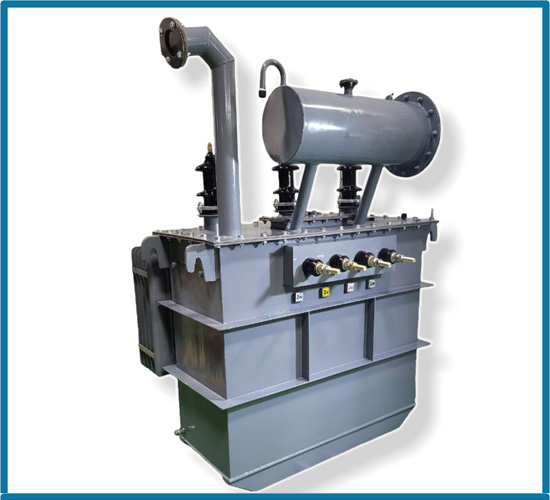
2. Monoblock Transformer Structure (Construction)
A Monoblock is a highly engineered component built for reliability under extreme electrical, thermal, and mechanical stress.
| Component | Material / Feature | Function |
|---|---|---|
| Insulating Body | High-grade cast epoxy resin (or porcelain for older designs). Vacuum-cast to eliminate air pockets. | Provides electrical isolation between live conductors and the grounded transformer tank. Prevents tracking and flashover. |
| Embedded Conductors | Tin-plated high-conductivity copper bars or rods. | Carries high current (up to 2500A or more) from internal windings to external cables/bus bars. |
| Mounting Flange | Aluminum or steel plate, integrated into the resin casting. | Bolts or welds the block to the transformer tank. |
| Sealing System | Rubber O-rings or gaskets recessed into the block. | Creates an oil-tight seal, preventing transformer oil leakage at the conductor exit points. |
| External Sheds (Creepage Distance) | Molded ribs or skirts on the external surface. | Increases the surface leakage distance, preventing external flashover in polluted or humid environments. |
Key Structural Feature: True Monoblock
Unlike traditional assemblies that use separate gaskets, clamps, and individual bushing turrets, the Monoblock is one solid casting. This eliminates multiple potential leak paths and mechanical weak points.
3. Monoblock Transformer Classification (Types)
Monoblocks are classified based on electrical, mechanical, and application parameters.
3.1 By Voltage Level
| Type | Voltage Range | Characteristics |
|---|---|---|
| Low Voltage (LV) | Up to 1kV | Compact design; closely spaced terminals; high current rating (e.g., 1000A–5000A). |
| Medium Voltage (MV) | 3kV – 36kV | Larger physical size; deeper external sheds for creepage. |
| High Voltage (HV) | Above 36kV | Very long insulation paths; often oil-filled or SF6 gas interface (rare in epoxy monoblocks). |
3.2 By Current Rating (Ampacity)
-
Standard Duty: 100A – 800A (distribution transformers).
-
High Current: 1250A – 5000A (industrial rectifiers, furnace transformers). Requires wider phase spacing and multiple parallel conductors.
3.3 By Mounting Method
| Mounting Type | Interface | Application |
|---|---|---|
| Flange Mount | Bolted to transformer cover with gasket | Pole-mounted distribution transformers. |
| Weld-on Type | Directly welded to tank wall | Hermetically sealed transformers (no maintenance). |
| Plug-in (Bushing well) | Accepts removable cable elbows | Underground / pad-mounted transformers (safe live connection). |
3.4 By Phase Configuration
-
Single-Phase Monoblock: Contains terminals for one phase (typically 2 or 3 bushings: line + neutral). Used in residential pole transformers.
-
Three-Phase Monoblock: Casts all 4 terminals (3 phases + neutral) into one block. Preferred for compact substations to save space.
3.5 By Material
-
Cast Epoxy Resin (Standard): High mechanical strength, anti-tracking, lightweight, waterproof. The true “Monoblock” material.
-
Porcelain (Ceramic) – Legacy: Fragile, heavier, requires separate metal clamps. Not a true monoblock in modern terms.
3.6 The “Monoblock Transformer” as a Complete Unit (CSS)
In commercial catalogs, a Monoblock Transformer may refer to a Compact Secondary Substation containing:
-
Oil-immersed type: Transformer submerged in oil, Monoblock insulator on top.
-
Dry-type (Resin encapsulated): No oil; transformer and Monoblock cast into a single resin block – the ultimate “monoblock” concept.
-
Sealed / Non-ventilated: Fully welded tank; the Monoblock is the only opening.
4. Monoblock Transformer Applications
Monoblocks are found wherever transformers need safe, reliable, and compact terminal exits.
| Application Sector | Specific Use |
|---|---|
| Distribution Transformers (Pole-mounted) | LV side (secondary) terminal block for 100–1000kVA transformers. |
| Pad-mounted / Underground Transformers | Plug-in Monoblocks allow safe connection of shielded cable elbows. |
| Industrial Rectifier Transformers | High-current LV Monoblocks (up to 5000A) for electroplating or aluminum smelting. |
| Furnace Transformers | Withstand extreme thermal cycling and high currents. |
| Wind / Solar Power Transformers | Compact Monoblocks in outdoor compact substations (CSS). |
| Railway Traction Transformers | MV Monoblocks for 25kV or 2×25kV autotransformer systems. |
Typical Location
The Monoblock is almost always located on the Low Tension (LT) side of the transformer (secondary, usually below 1kV) because high current requires robust, leak-proof bushings. The High Tension (HT) side often uses separate porcelain bushings due to higher voltage and lower current.
5. Advantages (Why Choose a Monoblock Design?)
Compared to traditional multi-component bushing assemblies, the Monoblock offers significant technical and commercial benefits.
| Advantage | Explanation |
|---|---|
| 1. Leak-proof | Single cast unit eliminates multiple gasket joints. Virtually zero oil leakage over transformer lifetime. |
| 2. Higher Dielectric Strength | Solid, void-free epoxy provides superior insulation between phases and to ground. Reduces risk of internal flashover. |
| 3. Mechanical Rigidity | Withstands vibration, short-circuit electromagnetic forces, and thermal expansion without cracking or loosening. |
| 4. Compact Footprint | Allows terminals to be spaced closer than traditional designs. Reduces transformer overall size. |
| 5. Corrosion Resistance | Cast epoxy does not rust or corrode, unlike metal bushing assemblies in coastal or industrial environments. |
| 6. Lower Maintenance | No need to retighten bolts or replace gaskets. Dry, solid insulation – no oil filling or monitoring required. |
| 7. Anti-tracking Property | Epoxy resin is formulated with fillers that resist carbon tracking from surface arcing. |
| 8. Easy Installation | Pre-assembled unit; simply bolt or weld to tank, then attach external cables. No field assembly of multiple parts. |
| 9. Weather & UV resistant | Suitable for outdoor pole mounting without additional enclosures (up to certain voltages). |
| 10. Fire safety (Dry type) | In dry-type Monoblock transformers (resin-encapsulated), no oil means no fire risk. |
Comparison: Monoblock vs. Traditional Assembly
| Feature | Traditional Bushing Assembly | Monoblock |
|---|---|---|
| Number of sealing points | Multiple (each bushing + gasket) | One (block to tank) |
| Leak risk | High | Near zero |
| Installation time | Long (assemble parts) | Short (pre-assembled) |
| Mechanical strength | Moderate | High |
| Space required | Larger | Compact |
| Cost (initial) | Lower | Higher |
| Lifetime cost | Higher (maintenance, leaks) | Lower |
6. Summary
A Monoblock Transformer (in the primary engineering sense) is a single-piece cast epoxy resin insulator that integrates multiple bushing terminals into one leak-proof, high-strength unit. It is mounted on the low-voltage side of distribution and industrial transformers to safely transfer high currents from the internal windings to external cables. Its main advantages are zero leakage, compactness, mechanical robustness, and low maintenance compared to traditional multi-part bushing assemblies.
In a broader commercial context, the term also refers to a Compact Secondary Substation (CSS) – a complete, factory-assembled electrical unit containing a transformer, switchgear, and distribution panel in one housing.
Monoblocks are essential for modern, reliable, and environmentally friendly power distribution – especially in outdoor, pole-mounted, and underground applications where oil leaks are unacceptable.