


What is a Vehicle Mounted Transformer?
Vehicle-mounted mobile transformer substations are prefabricated, compact power systems integrated onto one or more trucks or trailers, designed to serve as a flexible, rapid-response alternative to traditional permanent substations.
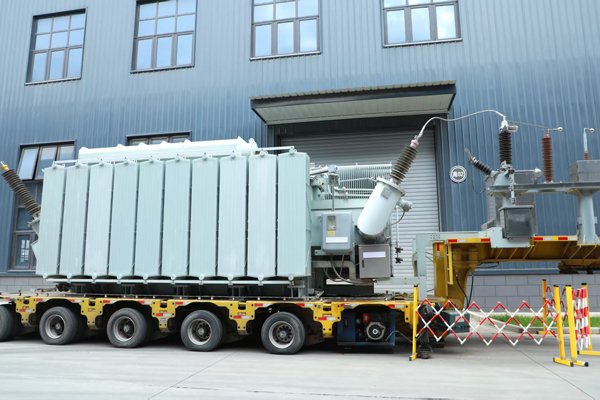
These mobile substations are engineered to meet temporary or emergency power needs. Here’s a breakdown of their key aspects:
Primary Applications
Emergency and Restoration: They are the “first responders” for power grids, providing fast restoration of service after natural disasters (like earthquakes or hurricanes), major equipment failures, or grid blackouts .
Infrastructure Upgrades: During the renovation or replacement of aging, permanent substations, a mobile unit can take over the entire load, allowing the work to proceed safely and quickly without any interruption to power users—a process that enables “zero blackout time” for customers.
Temporary and Seasonal Support: They provide power for large-scale events, major construction projects, and energy exploration (like oil drilling). They can also be deployed during peak seasons to relieve an overloaded local grid.
Remote and Developing Areas: They are an ideal solution for rapidly electrifying remote regions or areas with growing but unestablished demand, bypassing the long timelines and high costs of building a permanent substation.
Core Features and Design
A vehicle-mounted substation integrates all the critical components of a conventional substation into a mobile form factor :
Core Components: This typically includes a primary power transformer, high-voltage and low-voltage switchgear, control and protection panels, and an auxiliary power system, all pre-assembled on a vehicle chassis or trailer .
Flexible Configuration: While often a complete system on a single vehicle, for larger capacities they can be split into multiple modules (e.g., a “mobile GIS,” “mobile transformer,” and “mobile switchgear” trailer) that are connected on-site, like a heavy-duty, high-tech jigsaw puzzle . This modularity allows for assembly flexibility to suit different site needs.
Intelligent and Adaptable: Many modern units are “smart,” featuring remote monitoring, intelligent control systems, and automated protection logic. They are built to be “plug-and-play,” significantly reducing the time from arrival to operation—from months to just days .
Customization: Because they are often transported via public roads, their design must be compact and lightweight. Suppliers can customize the design for specific environments, such as withstanding high seismic activity or operating in extreme desert heat (e.g., 55°C) .
Economic and Operational Benefits
ignificant Cost and Time Savings: A key advantage is the drastic reduction in time and cost. One project case study shows the commissioning time was cut from 240 days (for a permanent station) to just 12 days, and capital investment was reduced by 67%.
Minimal Land Use: They require much less physical space than permanent installations, with the same case study showing land occupancy reduced by 80%.
Asset Efficiency: As they are easily relocatable, the asset can be leased or redeployed to different projects or locations as needs change, maximizing its utility over its lifecycle.